What they want
"The artist doesn't even speak, it just shows how he's putting things together until he has that eureka moment."
The narrator talks to a silent creative, what is said is seen in real time, pacing, lounging, a gust, then the brand. "This is the benchmark."
"There will be no missing pearls."
Every detail is decided in the first meetings of a two to three year project. Never imply EVA leaves anything unfinished.
"The final message should not feel like it's only an addition of accessories."
Curated is the whole process: peace of mind from design to the final touch, the client attended to at every point, pieces inspected in Europe.
"The client narrates their desires and aspirations through a voiceover, while the designer visually acts on them."
Fear of missing out in three forms: life's moments, access to the inaccessible, true individuality. End on why Curated exists.
"We don't even have a line on a paper yet."
Start from the empty villa. One real project throughout. Show, don't tell. Fast cuts for social. Never "real estate-y" or "too much finished product".
"A design should never be diluted between the drawing and the finished space."
Their tagline: "EVA Curated, from the first idea to the final detail." Her three references share dry, deadpan wit, bold colour and one lived-in home.
What award-winning directors do with this
Penny "The Wish", Cannes 2022 Film Craft Grand Prix
Google "Loretta": "she snorted when she laughed"
Loretta's real recording; IKEA "Lamp"'s non-actor
IKEA "Lamp", Spike Jonze, Cannes Film Grand Prix 2003
Patek Philippe "Generations"
WABA "One Taste", Dubai Lynx 2026 Film Craft Grand Prix, a Gulf homeware brand
Voice Notes
Busy Gulf clients don't sit in design meetings. They send their designer voice notes from wherever their life is happening.
Each film is built from one client's voice notes to her designer, Reem. We never see the client: we hear her life behind every note, a boarding call, a graduation, wedding drums behind a door, a fire at a desert camp. She never asks about progress; she never has to. She only says what she wants, once, often cryptically. Reem never speaks. She decodes it, deadpan, and makes it real.
Every note flickers into the empty villa as a ghost of her imagination, the way ADIDEM shows what is said in real time. Every film ends on a last voice note recorded inside the finished home: the sound of her life gives way to the sound of her house.
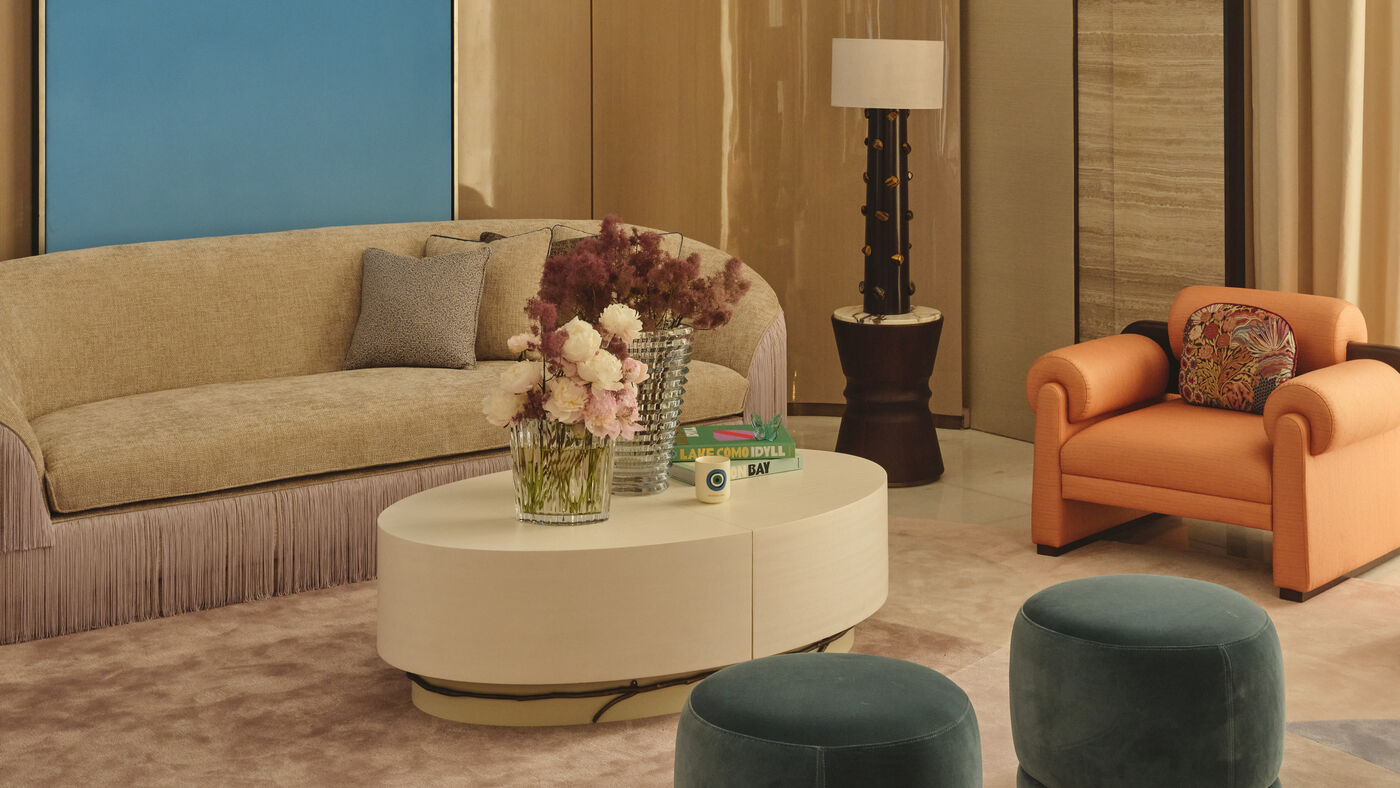
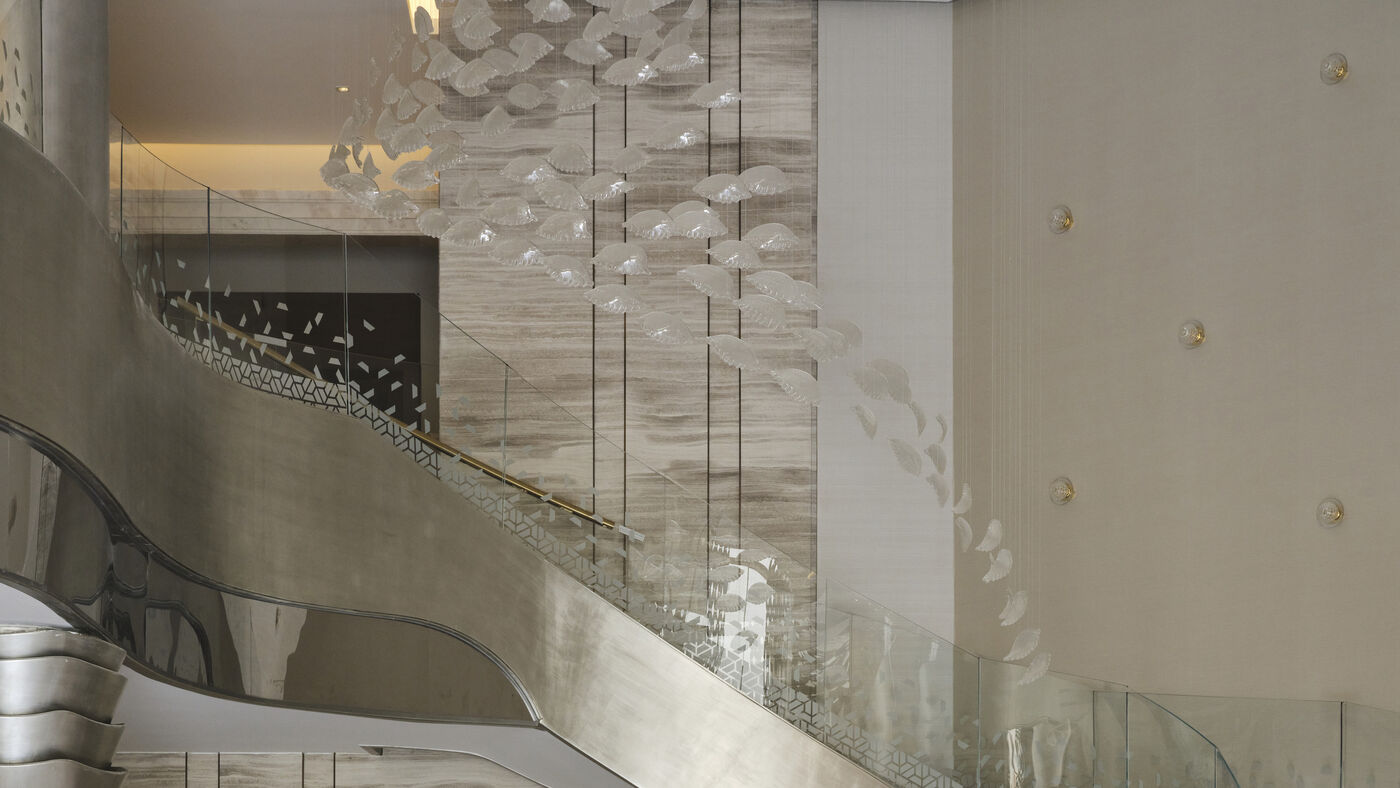
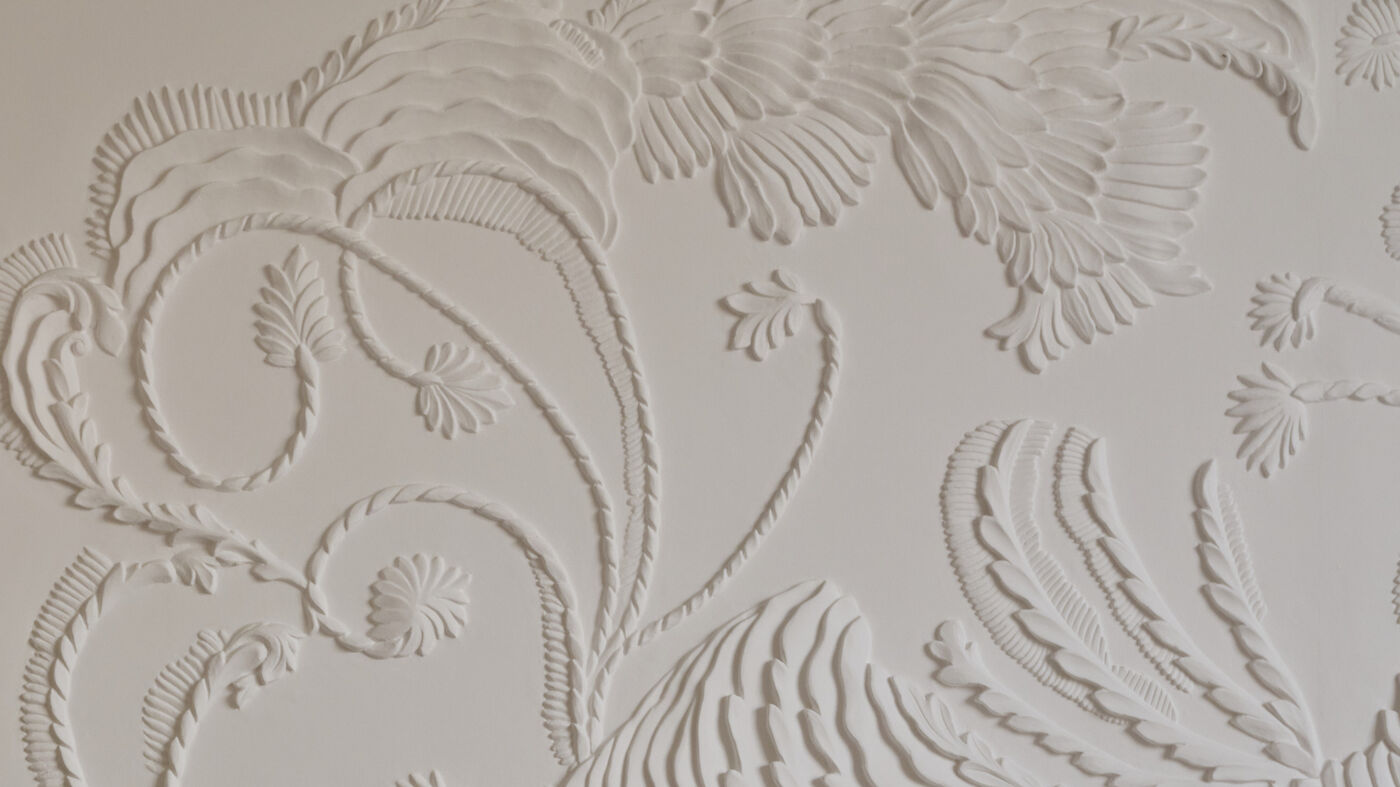
How one device carries the whole brief
The series
Film 01 carries all three fears, one note each, as Jumana's note describes one feature film. Each later film grows one of Film 01's notes into its own story.
| Film | Fear of missing out | What it owns | Length |
|---|---|---|---|
| 01 "Fourteen Chairs" the hero | all three, one note each | the whole journey, empty villa to lived-in home | 60 s |
| 02 "Under the Sea" | access to the inaccessible | one hunt: the lamp from Film 01's note | 45 s |
| 03 "Friday" | true individuality | the final layer: scent, light, sound, from Film 01's oud note | 45 s |
| Companion (launch) | none, pure visuals | her imagined ghosts turning into real things, cut from 01 | 15 to 20 s |
Film 01 "Fourteen Chairs"
Sounda name read out, cheering
SoundGulf wedding drums behind a closed door
Soundwind, a camp fire
Film 02 "Under the Sea"
- A cryptic note from a car at night, the indicator ticking:"A hotel in Italy. Years ago. The lamps were blue. ...Not that blue."
- Reem becomes the detective, ADIDEM's dream: a wall of clippings and old hotel brochures, a loupe over a 1960s photograph, a blue ghost on her studio wall.
- A dawn train, a lagoon, a workshop door with a sign: the maker no longer takes commissions. Reem slides the 1960s hotel photograph under it. The turn: the door opens.
- The old maker's ledger: under the hotel's 1960s order, a new line is written, a date and "Riyadh", no name on screen.
- A last note, recorded inside the home, the lamp glowing above:"It's the same blue. ...Don't tell me how."
Film 03 "Friday"
- Late-night notes, quiet, a clock:"My father's majlis smelled of oud every Friday morning.""I read at night. No ceiling lights. Ever.""And the coffee being pounded. That's Friday."
- Reem turns memory into layers: oud blends tested on strips until one stops her; the mabkhara ready at the family entrance; light scenes set, the reading lamp aimed, the ceiling dark; in her majlis, the dallah by the hearth and the brass mortar where the morning sun reaches it.
- The turn, by day, Friday morning: a last note recorded inside the home. Behind her, her son: "يمه، ريحة بيت جدي" ("Mum, it smells like Grandpa's house"). Her, after a beat:"...Reem."
Look, sound and voice
Questions for EVA
- Film 01 as the hero carrying all three fears, with 02 and 03 growing out of its notes: OK?
- The villa belongs to the Al Shemaisi family: OK to place a fictional client and invented details in their home?
- The client's voice: a woman (as written), a man or a couple; Najdi or neutral Khaleeji?
- Reem's look for the Saudi audience (hair uncovered or a loose shayla), and her signature colour.
- Your Arabic for "Once is enough." (we propose مرّة وحدة تكفي) and for "From the first idea to the final detail."
- Launch date (anything near Ramadan, around 8 Feb 2027?) and the reference for the companion film.
- OK to show generated European workshops (not EVA footage) in Films 01 and 02?
- Does the real Shmaisi dining table seat fourteen? The number follows the real table.
- The last line: "...She wants your number." (as written: praise and word of mouth; it may also be heard as matchmaking for her son, which could be funnier or wrong), "...She wants you for her house.", or the drier "...She hasn't complained once."?
How it scored
Two critics who never wrote a line of it: one as an award-winning director and Dubai Lynx juror, one as Jumana and Ibrahim with a Saudi cultural consultant.
Director and Dubai Lynx juror lens. Film 01: 8, Film 02: 8, Film 03: 7.5. Rounds: 6 → 7.5 → 8 → 8. "The ghost-as-her-imagination grammar now carries the wit."
Jumana, Ibrahim and a Saudi cultural consultant lens. Rounds: 6 → 7.5 → 8.5 → 9. Every brief point met; no blocker.
What the reviews changed. Eureka moved to the empty villa; notes became wishes, not status checks; all three fears in Film 01; payoff by sound and a full table in hands only; Gulf details fixed (wedding drums, mabkhara at the entrance, dallah by the hearth, no dates at the table, programme not cap); the series line became "Once is enough."
Still for EVA. Consent for a fictional client in the Al Shemaisi home, the client's voice, Reem's look, the Arabic lines, the 14-seat table, and the last line.
Films we studied
- ADIDEM "Sophisticated Fun", Tenfold Production, dir. Jason Dam (management's benchmark): youtube.com/watch?v=t2LMvk7CKJ0
- Versace "House Party", dir. Robi Rodriguez (Jumana's reference): youtube.com/watch?v=HXFkg0vwLpQ
- ELEMENTS, Can of Tales (Jumana's reference): youtube.com/watch?v=-1YBFXCMG2c
- WABA "One Taste", Shareet Studios, Dubai Lynx 2026 Film Craft Grand Prix: vimeo.com/1156556785
- Penny "The Wish", Serviceplan, dir. Marcus Ibanez, Cannes 2022 Film Craft Grand Prix
- Google "Loretta" (2020); Google Chrome "Dear Sophie" (2011); IKEA "Lamp", dir. Spike Jonze (2002); Patek Philippe "Generations"; IKEA "Made for Life" (2025)
- EVA's own process film: instagram.com/p/Ddegb6ho_zk